
"three leaves"
6000 article(s) found

What Arabica coffee beans does Luckin Coffee use? Learn about the three major varieties of coffee!
Professional coffee knowledge exchange more coffee bean information Please follow the coffee workshop (Wechat official account cafe_style) Coffee varieties can be divided into Arabica (Robusta) Liberica (Arabica) generally speaking, Arabica is mainly used in single or boutique coffee, Robusta is used to make instant coffee. From the orientation of taste

What is the difference between tea and coffee extracted by the same plant after roasting?
Pu'er Tea [Photo: Vicky Wasik] the main difference between where I keep my tea set and where my coffee equipment is located is scale. My coffee cabinet is constantly filled with products-ceramic cones, various grinders, Danish immersed neoprene pans and so on. On the other hand, there are only three tea sets in my tea drawer-one glass jar with a filter, one

Comparison of planting environment of small-leaf tea in China and big-leaf tea in Assam, India
Although the growth of tea from bitter waxy leaves on shrubs to tea in pots seems to be absurd, tea makers actually followed the basic steps invented by Chinese farmers in the 18th century. Tea is part of the genus Camellia. There are three main varieties used to produce tea: Chinese lobular tea (sinensis), Assam tea (assamica) and Cambodian tea (cambodi)
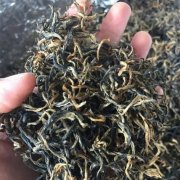
Yingde specialty authentic Yinghong No. 9 black tea how much is a jin of Yinghong No. 9 black tea suitable for who to drink?
Some of the best Guangdong black tea is produced in Yingde in Guangdong Province. Yingde has been a tea producing area since the Tang Dynasty. At the beginning of the Ming Dynasty, Yingde black tea was chosen as a tribute to others. Yingde black tea, Yunnan Dianhong and Anhui Qihong are known as the three major black teas in China. My favorite tea is Yinghong 9. The dry leaves are black and they are reddish brown after brewing. This tea comes from Daye, Yunnan.
Boutique coffee (specialty coffee) II
With regard to the cultivation of crops, seed selection is a very important factor. Every year, agronomists are studying higher quality and higher yield varieties of wheat, soybeans, and corn, as well as how to make apples more delicious, beautiful and resistant to diseases and insect pests. In fact, the same is true of coffee. The quality and taste of coffee are determined by the quality of the varieties. Coffee trees are generally divided into three categories in the industry: Arabica species

Boutique coffee (specialty coffee) II
With regard to the cultivation of crops, seed selection is a very important factor. Every year, agronomists are studying higher quality and higher yield varieties of wheat, soybeans, and corn, as well as how to make apples more delicious, beautiful and resistant to diseases and insect pests. In fact, the same is true of coffee. The quality and taste of coffee are determined by the quality of the varieties. Coffee trees are generally divided into three categories in the industry: Arabica species
What's the difference between the extraction of coffee and tea? why is coffee ground tea but directly soaked?
Pu'er Tea [Photo: Vicky Wasik] the main difference between where I keep my tea set and where my coffee equipment is located is scale. My coffee cabinet is constantly filled with products-ceramic cones, various grinders, Danish immersed neoprene pans and so on. On the other hand, there are only three tea sets in my tea drawer-one glass jar with a filter, one

What are the three major oolong teas in China? what are the famous varieties and brands of oolong tea?
What is oolong tea? Do you think I said something wrong? Black tea and green tea have a completely different appearance, while dragon tea looks like black tea as well as green tea. In China, tea is divided into six categories according to processing methods; this classification is globally recognized. Oolong tea is a separate category, also known as partially fermented tea. Oolong tea has many subtypes, and its fermentation degree and processing technology are also
What are the coffee beans for fine coffee learning?
Seed selection is a very important factor in crop cultivation. Agricultural scientists are studying better and higher yield varieties of wheat, soybeans and corn every year. They are also studying how to make apples taste better and more beautiful and resistant to pests and diseases. In fact, coffee is the same. The quality and taste of coffee are determined by the quality of varieties. The industry generally divides coffee trees into three categories: Arabica
Boutique coffee specialty coffee (2) Coffee bean varieties
With regard to the cultivation of crops, seed selection is a very important factor. Every year, agronomists are studying higher quality and higher yield varieties of wheat, soybeans, and corn, as well as how to make apples more delicious, beautiful and resistant to diseases and insect pests. In fact, the same is true of coffee. The quality and taste of coffee are determined by the quality of the varieties. Coffee trees are generally divided into three categories in the industry: Arabica species
Four steps to pull tulips leaves pull tulips
1. Heigh) Before pulling flowers, you need to let the milk foam and espresso blend into one. At the beginning of pouring coffee, pour the foam into the coffee from a height of about 5 cm from the surface of the coffee, and the milk flow should be as thin as a mouse tail or even thinner. At this point, the foam and espresso will naturally blend into one. At this point, you can start producing.

Cultivation techniques of small Coffee in Yunnan Province Coffee Tree Disease Control
1. Coffee rust is the main disease of coffee, the most harmful, the damaged plants, light reduced yield, serious death. Coffee rust is mainly harmful to leaves and sometimes to young fruits and twigs. After the leaves were infected, many light yellow spots appeared at first and enlarged in the form of water stains, followed by orange-yellow powdery spores on the back of the leaves, and there was a light green halo around the disease spots, which gradually expanded or connected in the later stage.

Cultivation techniques of small-grain Coffee in Yunnan Province: disease Control
1. Coffee rust is the main disease of coffee, the most harmful, the damaged plants, light reduced yield, serious death. Coffee rust is mainly harmful to leaves and sometimes to young fruits and twigs. After the leaves were infected, many light yellow spots appeared at first and enlarged in the form of water stains, followed by orange-yellow powdery spores on the back of the leaves, and there was a light green halo around the disease spots, which gradually expanded or connected in the later stage.

Introduction of High-quality Coffee in producing areas of Ethiopian Coffee
In Ethiopia, the grading and quality control system of coffee is divided into three levels: producer, regional and national. All coffee is inspected by local inspection agencies before leaving the country of origin, and then re-tested at the coffee inspection and grading centers in Addis and Diredawa to determine its quality grade. Coffee is graded before auction and sale, for all involved in production, acquisition,

The production process of high-grade Qimen Gongfu black tea what is the difference between the flavor characteristics of smoked Qimen Gongfu tea and that of non-smoking
After a few hours' bus ride, I found myself in a small mountain village. A friend of mine who grew up here kindly offered to be my guide for the past two days. Many pickers came back from the tea garden and their baskets were full of small and tender tea. There are other people next to their store, each of them
Basic knowledge of coffee Common sense of the definition of fine coffee 2
With regard to the cultivation of crops, seed selection is a very important factor. Every year, agronomists are studying higher quality and higher yield varieties of wheat, soybeans, and corn, as well as how to make apples more delicious, beautiful and resistant to diseases and insect pests. In fact, the same is true of coffee. The quality and taste of coffee are determined by the quality of the varieties. Coffee trees are generally divided into three categories in the industry: Arabica species
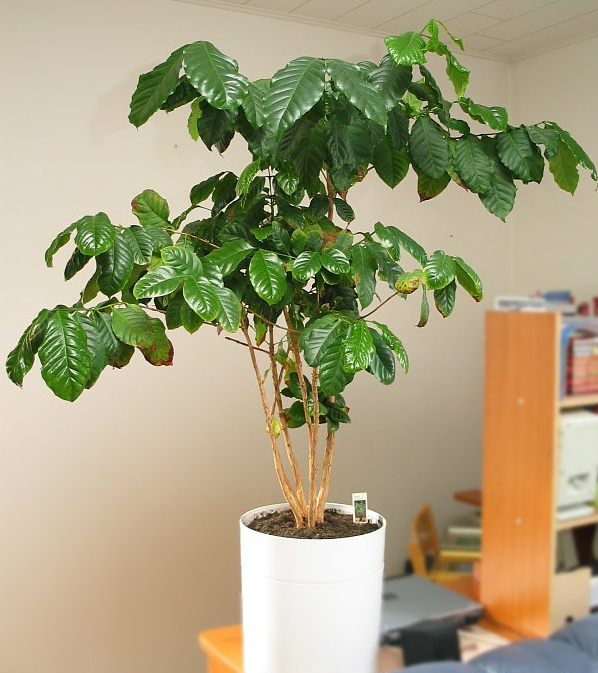
Technical Essentials of planting domestic Coffee trees
First, seeds: they can be picked by themselves or purchased online. Second, seed treatment: choose coffee seeds with good quality and parchment. Third, planting: the treated seeds can be planted directly or soaked in water before planting. Direct planting is very simple, put the seeds directly into vermiculite, the thickness of the surface soil and the thickness of the seeds can be the same; soaking varies according to different seasons. Such as

How long does it take to grow coffee?
How long does it take for coffee to grow? coffee trees can blossom in a few years, and when coffee trees blossom and bear fruit will be introduced to you by the editor. Coffee tree opposite leaves are long oval, smooth leaves, the end of the branch is very long, few branches, and the flowers are white, open at the base of the petiole connecting the branch. In fact, the Arabs began to grow coffee in 525 BC.

Common sense of Coffee Tree planting
Professional coffee knowledge exchange more coffee bean information Please pay attention to the coffee workshop (Wechat official account cafe_style) Coffee trees grow in the tropics between the Tropic of Cancer and the Tropic of Cancer and near the equator, also known as the world coffee growth belt, caffeine varieties and regional factors, there are also great differences in appearance. The color of leaves ranging from yellowish green to dark green or even to brass.